Long Live the Death of the Album: Why Streaming Chaos Is Actually Rock's Best Rebellion
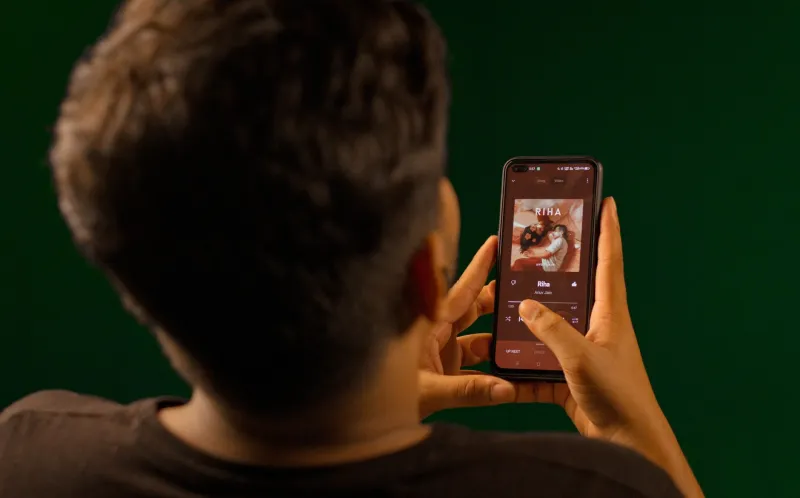
Every few months, some graying music critic dusts off his think-piece template and delivers the same eulogy: the album is dead, streaming killed it, everything is garbage, kids these days, etc. And look — we get it. There's something viscerally satisfying about a perfectly sequenced 12-track record that takes you on a journey from track one's explosive opener to the quiet, devastating closer. We're not monsters. We've listened to Rumours in the dark too.
But here's the contrarian truth nobody in a turtleneck at a record convention wants to admit: the album format was always, at least partly, a commercial constraint dressed up as artistic virtue. And now that streaming has blown the doors off that constraint, a genuinely weird, genuinely exciting era of music-making has crept in through the rubble.
So grab your hot take bingo cards, because we're going in.
The Album Was Never Purely About Art
Let's rewind. The modern album format — roughly 35 to 75 minutes of music released as a unified product — didn't emerge from some divine creative revelation. It emerged from the physical limitations of vinyl, then cassette, then CD. Artists filled the space because the space existed, and record labels needed a product they could shrink-wrap and ship to Tower Records.
That's not cynicism. That's just history. And it means that for every OK Computer or Purple Rain — records where every second earns its place — there were approximately ten albums with four great singles and eight tracks that existed purely to hit a runtime. You know the ones. You've skipped them your whole life. You just didn't feel guilty about it until now.
Streaming didn't invent filler. It just finally made filler skippable without the social shame of visibly fast-forwarding a CD at a party.
The New Shape of a Music Career
Here's where it gets interesting. Without the album as the mandatory unit of artistic output, musicians are doing something radical: releasing music on their own terms, at their own pace, in whatever shape feels right.
Take artists like Faye Webster, who drops lush, melancholy singles that feel complete on their own. Or the entire hyperpop ecosystem, where artists like 100 gecs release chaotic, three-minute fever dreams that would've been career suicide under a major label's traditional rollout strategy. Or consider how Lana Del Rey has essentially turned her entire catalog into one long, continuous mood — an ambient universe you dip in and out of rather than a series of discrete album events.
We talked to Marcus Veil, frontman of Chicago-based post-punk outfit Burial Static, who's been releasing music exclusively through singles and short EPs since 2021. "We tried writing an album," he told us, laughing. "We had 14 songs and kept cutting them because they didn't fit the 'arc.' But then I realized — who decided there needs to be an arc? We just started releasing the songs when they were done. Our listeners actually engage more now. They're not overwhelmed."
That word — overwhelmed — keeps coming up. In a content landscape where attention is the scarcest resource on earth, dropping 12 songs at once might actually be the least effective way to get people to hear your music.
Playlists Are the New Mixtapes, and That's Cool, Actually
The purists will tell you that playlist culture has atomized music into decontextualized fragments, stripping songs of their meaning. And sure, there's a version of that critique that holds water. But there's another version of playlist culture that looks a lot like something rock fans used to celebrate: the mixtape.
Remember the mixtape? That deeply personal, carefully curated artifact you made for a crush or a road trip or a breakup? The thing that said I know you, and here's how music proves it? Playlists are that, scaled up and democratized. Your Spotify playlist isn't a lesser art form than an album — it's a different one, with its own logic and intimacy.
And frankly, the fact that a 17-year-old in Omaha can now build a listening experience that flows from a 1973 Iggy Pop deep cut into a 2024 bedroom pop single into a live Fontaines D.C. recording is not the apocalypse. That's a music education in real time.
The Artists Who Are Thriving in the Chaos
Some of the most exciting rock-adjacent music right now is being made by people who've completely abandoned the album-cycle treadmill. Mk.gee releases music that feels like transmissions from another dimension — no press junket, no 18-month rollout, just the work. Wednesday, the Asheville-based alt-country-noise band, has built a devoted cult following through a steady stream of releases that reward deep listening without demanding you consume them as a unified product.
Even legacy artists are adapting. Wilco's Jeff Tweedy has been more prolific in the streaming era than at almost any other point in his career, releasing solo records, archival material, and collaborative work with a frequency that would've been commercially impossible under the old model.
The album isn't dead. It's just no longer mandatory. And that distinction matters enormously.
The Actual Loss (Because We're Not Totally Heartless)
Okay, one concession: what streaming has genuinely eroded is the cultural event of an album release. When Nevermind dropped in 1991, it landed like a bomb. Everyone heard it at the same time. It became a shared cultural moment that shaped a generation's identity. That kind of synchronized, communal experience is harder to manufacture in an era of perpetual content flow.
But — and this is important — that loss isn't streaming's fault alone. It's a symptom of broader cultural fragmentation that would've happened regardless. We live in a world of infinite niches now. The monoculture is gone. Mourning the album as a cultural detonator is really mourning the monoculture, and the monoculture had plenty of problems of its own.
The Verdict
The streaming era didn't murder music. It murdered the middlemen who profited from making artists produce bloated, over-packaged products on someone else's timeline. What replaced it is messier, more chaotic, and occasionally overwhelming — but it's also more honest, more experimental, and more alive than the industry that came before it.
The album isn't gone. It's just no longer the only game in town. And if you've been paying attention, the games being played outside that structure are some of the most interesting music happening right now.
So go ahead and mourn your gatefold double LP if you need to. We'll be over here building a playlist that goes from Joy Division to Ethel Cain to a 2024 math-rock band you've never heard of, and we will feel absolutely no shame about it.