Tone Chasing Is a Scam and You Should Absolutely Fall for It
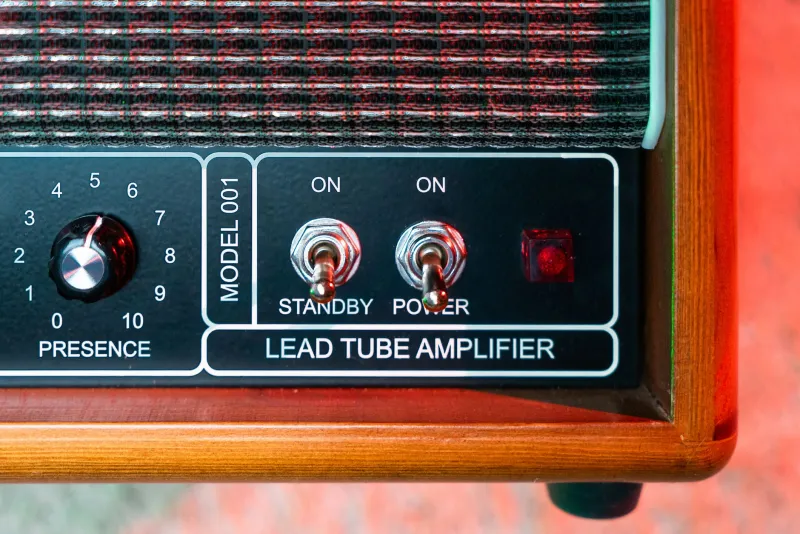
Let's get one thing straight before we go any further: you cannot hear the difference between a 1959 Marshall JTM45 and a modern boutique clone in a blind test. Studies have been done. Guitarists have been humiliated. YouTube comment sections have been set ablaze. The science is in, and the science says your ears are liars dressed up in denim jackets.
And yet. And yet.
You're still going to spend four months of grocery money on a tweed combo with a cracked speaker baffle and oxidized input jacks, and you're going to feel like a god the moment you plug in. That's not stupidity. That's not even nostalgia, exactly. That's something far weirder and more human, and it deserves a proper autopsy.
The Myth of the Magic Box
Here's what the vintage gear industry — and yes, it is an industry, complete with gatekeepers, speculators, and guys named Dale who haunt guitar shows in Tulsa — doesn't want you to examine too closely: the "tone" you're chasing was never really in the amp.
It was in the room. It was in the microphone placement. It was in the hands of a session player who'd been doing this since before you were born. It was in the tape compression at Sun Studio or the specific atmospheric humidity of a London basement in 1968. You can buy every piece of that signal chain and still sound like a guy who just learned "Smoke on the Water" last Thursday.
Modern amp builders know this. Companies like Kemper and Fractal have essentially solved the technical problem of replicating vintage tone with algorithmic precision. Neural DSP can give you a Plexi stack at bedroom volume without your landlord filing a noise complaint. By every measurable, reproducible, scientifically defensible metric, the gear problem has been solved.
So why does the 1959 Marshall still sell for thirty grand?
Because We're Not Actually Buying Sound
Here's the uncomfortable truth that nobody in the guitar forum will admit between arguments about pickup height: we're not buying tone. We're buying mythology.
When you plug into a Vox AC30 that actually belonged to somebody who played the Cavern Club circuit, you're not just completing a circuit. You're completing a story. You're reaching backward through decades of culture and sweat and cigarette smoke and touching something that existed in the same physical space as the music that rewired your brain when you were fourteen years old.
That's not rational. It's also not nothing.
This is why the vintage gear market operates like fine art collecting more than it does like consumer electronics. A Les Paul Standard from 1959 isn't priced at $400,000 because it sounds $399,800 better than a new one. It's priced that way because it carries provenance, because it's a relic, because owning it is a way of owning a piece of a cultural moment that can't be manufactured or replicated no matter how good the modeling software gets.
And honestly? Respect.
The Real Sonic Argument (Which Is Smaller Than You Think)
Okay, fine. Let's steelman the tone nerds for a second, because they're not entirely wrong.
Vintage amplifiers were built with components that simply don't exist anymore. Old-stock capacitors age in ways that affect frequency response. Transformers wound in the 1950s and 60s have characteristics that modern manufacturing doesn't perfectly replicate at scale. Tubes from the Soviet era — the legendary Mullards, the Telefunkens — have measurable differences from current production equivalents.
These differences are real. They are also, in almost every live performance context, completely inaudible to your audience.
The guitarist who swears the crowd can feel the difference between his original-spec Dumble and a clone is the same guitarist who's running through a PA system being operated by a sound engineer who's half-listening while texting. The nuance you paid for is being compressed, EQ'd, and broadcast through speakers that cost less than your instrument cable.
But here's where it gets interesting: you can feel the difference. And that matters.
The Psychology of Playing Better Because You Believe
There's a phenomenon in sports psychology called equipment confidence, and it's real enough that professional athletes take it seriously. When you believe your gear is exceptional, you play differently. You commit harder. You take more risks. You lean into the instrument instead of fighting it.
A guitarist who just dropped three grand on a vintage Supro that belonged to nobody famous but feels like it could have will play with a different kind of conviction than someone noodling through a modeling amp they're still learning to navigate. The belief in the tool changes the relationship with the tool.
This is why tone chasing, despite being objectively irrational, produces real results. Not because the amp is magic. Because you become slightly more magic when you think it is.
So Should You Buy the Vintage Amp?
Yes. Conditionally. With your eyes open and your credit card braced.
Buy it if you're buying an experience, not a solution. Buy it if you understand that you're investing in a relationship with an object that has history baked into its circuits, and that relationship will make you a more engaged player. Buy it if you've got the budget to absorb the maintenance costs, because old amps break, and the tech who can fix a vintage Matchless correctly is not cheap.
Do not buy it if you think it will fix your playing. Do not buy it if you're hoping the tone will compensate for the songwriting. Do not buy it expecting your audience to notice, because they won't, and that's okay.
The vintage gear obsession is a scam in the sense that all great rock and roll mythology is a scam — it promises something transcendent and delivers something human instead. Which, if you think about it, is exactly what the music itself does.
The Only Gear That Matters
Every generation of players has its own version of this argument. The boomers chased the gear their heroes used. Gen X raided pawn shops for the same reason. Millennials drove up the prices on everything that boomers and Gen X overlooked. Now Gen Z is discovering that the modeler their older sibling dismissed as a toy is actually extraordinary, and somewhere a 45-year-old is typing furiously about how they just don't understand real tone.
All of it is the same conversation. All of it is about belonging to a lineage, about touching the hem of something larger than yourself, about making music that feels connected to the music that mattered.
The amp is never really the point. The point is always the story you're trying to join.
Now go refresh Reverb.com. You know you want to.