From Side A to Skip: How Streaming Killed the Album and Nobody Threw a Funeral
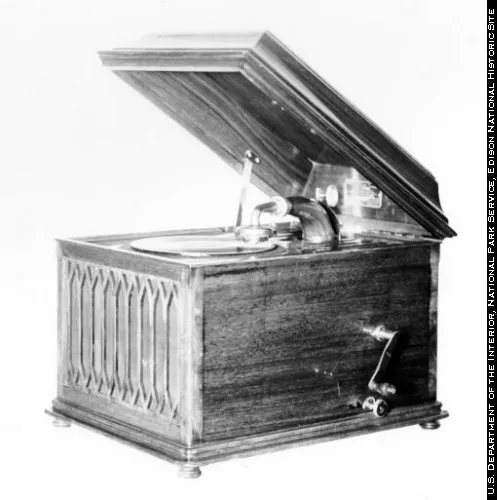
Photo: Thomas Edison National Historical Park, Public domain, via Wikimedia Commons
Somewhere between the death of the CD and the birth of the 'Sad Indie Drive' playlist, we quietly buried one of rock music's most powerful formats and didn't even bother to mark the grave. The album — not the collection of loosely related songs you dump on Spotify every eighteen months, but the real album, the kind with a spine and a heartbeat and a deliberate track order — is functionally extinct. And most people under 25 are scrolling right past its tombstone without a second glance.
This isn't nostalgia for nostalgia's sake. This is an autopsy.
What a Real Album Actually Was
Let's set the scene. It's 1979. You just spent your last $8 on The Wall by Pink Floyd. You get home, you drop the needle, and for the next hour and a half you do not move. Not because you're lazy — because the music won't let you. Side A ends and you physically have to get up, flip the record, and recommit to the experience. That act of flipping the vinyl was a ritual. It was the intermission of a rock opera that was actively rearranging your understanding of alienation, war, and your own father.
Or jump to 1991. Nevermind drops and it doesn't just have a hit single — it has a sequence. "Smells Like Teen Spirit" doesn't hit as hard without the slow build of what comes after it. "Something in the Way" closing the album isn't an afterthought; it's the exhale after a scream. Kurt Cobain wasn't making a playlist. He was constructing an emotional arc.
That's what albums were: emotional architecture. And we demolished them for algorithm-friendly rubble.
The Playlist Industrial Complex
Here's how the sausage gets made in 2024. A band finishes recording a record. Before it drops, their label's streaming strategy team — yes, that's a real job now — analyzes which tracks are most likely to land on Spotify's editorial playlists. Not "which tracks best represent the artistic vision," but "which ones have the tempo, tag, and sonic fingerprint that the algorithm rewards."
So the running order gets shuffled. The weird seven-minute closer that makes the whole album make sense gets quietly buried as "Track 11" where nobody will ever find it. The punchy three-minute single with the hooky chorus gets pushed to the front, engineered for the first fifteen seconds of a thirty-second preview. The album becomes a delivery mechanism for singles. The singles become a delivery mechanism for streams. The streams become a delivery mechanism for playlist placement. The playlist placement becomes a delivery mechanism for brand partnerships.
And somewhere in that chain, the art got lost in the mail.
Gen Z, Side B, and the Great Forgetting
We're not here to drag Gen Z — honestly, the music industry did this to them before they even showed up. But let's be real: if you grew up with Spotify autoplay as your primary music delivery system, the concept of "Side A" and "Side B" is basically ancient history. It's like asking someone who grew up with GPS to explain how to read a paper map. The knowledge isn't there because the need was engineered out of existence.
Ask a 19-year-old to sit down and listen to Marquee Moon by Television — start to finish, no skipping, no phone — and watch what happens. Either something clicks and they get it, or they're reaching for their AirPods after three minutes because the algorithm trained them to expect a drop that never comes. Television wasn't making drops. They were making journeys.
The tragedy isn't that young people are somehow lesser music fans. The tragedy is that they've been handed a format — the playlist, the shuffle, the endless queue — that actively prevents them from experiencing music the way it was designed to be heard.
The Albums That Proved the Format Was Everything
You want evidence? Let's run the tape.
The Rise and Fall of Ziggy Stardust and the Spiders from Mars by Bowie isn't just a collection of songs. It's a character study, a narrative, a theatrical arc that collapses beautifully in the final track. Pull any single song out of context and it's good. Listen to the whole thing in order and it's transformative. The format is the point.
Mellon Collie and the Infinite Sadness by Smashing Pumpkins was a sprawling double album that Billy Corgan explicitly designed as a statement — two discs representing "Dawn to Dusk" and "Twilight to Starlight." It was pretentious and ambitious and completely uncompromising, and it sold ten million copies in the US alone. People wanted the full experience. They bought the full experience.
American Idiot by Green Day was a concept album about a kid fleeing suburban American numbness who gets radicalized by cable news and ends up broken by the very rebellion he sought. It came out in 2004 and it still sounds like a diagnosis. You cannot extract "Boulevard of Broken Dreams" from that album and fully understand what Billie Joe Armstrong was doing. The context is the meaning.
Now imagine any of those albums being pitched to a streaming strategy team today. "It's 74 minutes, there's no obvious single until track four, and the last three songs are basically an extended meditation on disillusionment." They'd be laughed out of the room.
Is Anyone Still Building Cathedrals?
To be fair — and we're occasionally fair here at Fool Cool Rock — there are artists still trying. Kendrick Lamar has basically made albums-as-manifestos his entire brand. To Pimp a Butterfly is a fully realized artistic statement that demands to be heard as a whole. Phoebe Bridgers made Punisher as a cohesive emotional document. Wet Leg's debut had a specific weird energy that only made sense as a complete listen.
But these are exceptions swimming upstream against a current that is moving very, very fast in the other direction.
The streaming model doesn't just prefer singles over albums — it financially incentivizes them. More releases means more algorithmic touchpoints. More algorithmic touchpoints means more streams. More streams means more revenue. An artist who drops a single every six weeks will almost always outperform an artist who disappears for two years to make something meaningful. The math is brutal and it doesn't care about your artistic vision.
Flip the Record
Here's the thing nobody in the music industry wants to say out loud: we built a system that actively punishes ambition. We took the format that produced Dark Side of the Moon, London Calling, Loveless, and OK Computer — and we replaced it with a dopamine slot machine that rewards whoever can make the most forgettable hook in the shortest possible time.
The album isn't just a format. It's a philosophy. It's the belief that a listener deserves more than a highlight reel, that music can take you somewhere specific, that an artist's vision is worth the full journey and not just the scenic overlook.
Somebody needs to flip the record. Even if it's just to hear what's on the other side.