The Invisible DJ in the Machine: How Playlist Curators Became Rock's New Overlords
Remember how good it felt when the old radio system started collapsing? The bloated Clear Channel empires crumbling, the payola scandals, the same forty songs cycling through your car speakers like a fluorescent-lit purgatory? We were supposed to be free. The internet was going to flatten everything, democratize discovery, hand the keys directly to the artists and the fans and cut out every smug middleman who'd been collecting rent on other people's creativity for decades.
Congratulations. We traded one gatekeeper for an army of them — and this batch doesn't even have to put their name on the door.
Same Rope, Different Ceiling
The Spotify editorial playlist system — and really the whole ecosystem of algorithmic curation that's grown around it — functions almost identically to the old radio promotion machine. There's a small group of people deciding what gets heard. There's an invisible criteria for what qualifies as worthy. There's a feedback loop that rewards whatever already sounds like what's already winning. And there's essentially no transparent appeals process when your band gets left out in the cold.
The difference is that the old radio DJ had a face. You could resent Don Imus specifically. You could write a song about corporate radio and point at something real. The new gatekeepers are a combination of anonymous editorial staff at streaming platforms, third-party playlist curators with follower counts in the millions, and the algorithm itself — a black box that nobody outside a few engineering teams actually understands, including the people who ostensibly work alongside it.
At least the old system had the decency to be visibly corrupt.
The Playlist Is the New Airplay
Here's the math that nobody in the streaming utopia sales pitch bothered to mention: landing on a major Spotify editorial playlist — something like Rock This, All New Rock, or the perpetually mysterious New Noise — can mean the difference between a band building actual momentum and a band releasing music into an absolute void. We're talking potential streams in the millions versus a few thousand. That's not a small advantage. That's the entire ballgame.
So naturally, a whole industry has grown up around gaming this system. There are pitch services. There are curators-for-hire. There are PR companies whose entire value proposition is having a relationship with the right Spotify editorial contact. There are third-party playlist curators on SubmitHub who'll listen to your track for three dollars and give you a rejection in the form of a dropdown menu. The infrastructure of access has been meticulously reconstructed, just without any of the legal accountability that eventually forced the old radio industry to at least pretend to clean itself up.
Payola was illegal. Paying a playlist promotion service to submit your track to influencer curators is just... Tuesday.
The Algorithm Is Not Your Friend, and It Definitely Isn't Neutral
Let's talk about the other half of this equation, because human curators are only part of the problem. The algorithmic side — Discover Weekly, Radio, the autoplay queue — operates on engagement signals that inherently favor certain kinds of music. Tracks that get skipped get deprioritized. Tracks that get added to personal libraries get boosted. Tracks that cause listeners to bail on a playlist drag down the whole session.
What does this mean in practice? It means the algorithm is structurally allergic to challenge. Music that demands something from the listener — that takes a few plays to click, that starts slow, that has a weird middle section that pays off eventually — gets punished before it gets a chance. The algorithm doesn't care about artistic development. It cares about immediate retention. And rock music, historically, has been a genre that rewards patience. The best records are often the ones that didn't make sense the first time.
Streaming metrics aren't built for that. They're built for the first thirty seconds, because that's when Spotify counts a stream. Everything after that is your problem.
Organic Discovery Is on Life Support
There's a specific kind of music fan experience that's basically extinct now, and nobody's putting up a memorial. It was the experience of stumbling onto a band through actual friction — a weird college radio show at midnight, a recommendation from a record store clerk who was annoyed you didn't already know about them, a friend burning you a CD with no tracklist so you had to earn the knowledge. Discovery used to have texture. It used to leave marks.
Algorithmic discovery is frictionless by design, and frictionlessness has a cost. When Spotify serves you a band because you liked another band, you're not discovering anything — you're being sorted. The recommendation engine is trained to keep you comfortable, to serve you music that sits just slightly outside your existing taste without ever truly challenging it. It's the music equivalent of a restaurant that customizes your meal based on your previous orders and never lets you try anything that might confuse you.
The result is a generation of listeners whose taste is curated for them by a system optimizing for engagement, and a generation of bands who've learned to write for the algorithm instead of for the room.
The Underground Is Doing Something About This (Slowly)
To be fair — and we're going to be fair exactly once before going back to being furious — there are cracks in the system. Bandcamp still exists, and it still functions as a genuinely human-powered discovery space, even if its future under new ownership is anyone's guess. Independent radio stations, particularly college radio, have quietly maintained their relevance in a way the streaming platforms would prefer you not notice. YouTube's recommendation engine, chaotic and occasionally unhinged as it is, has a longer tail than Spotify's and has launched more than a few genuinely unexpected careers.
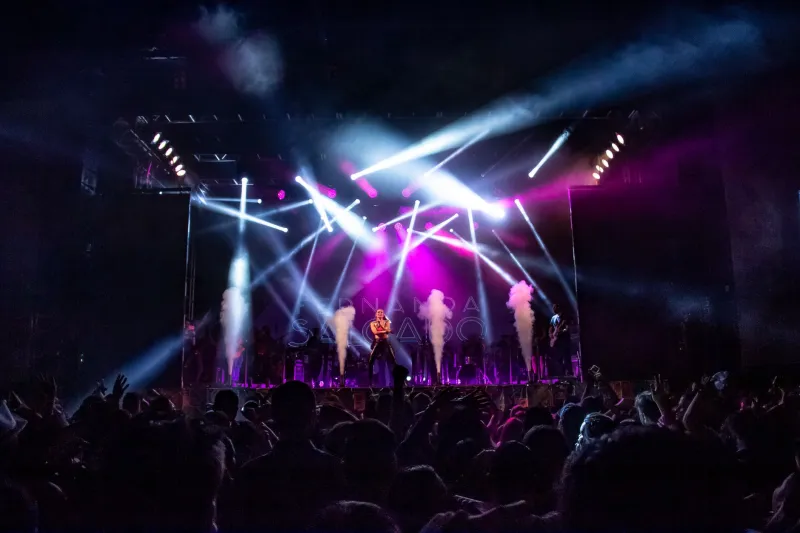
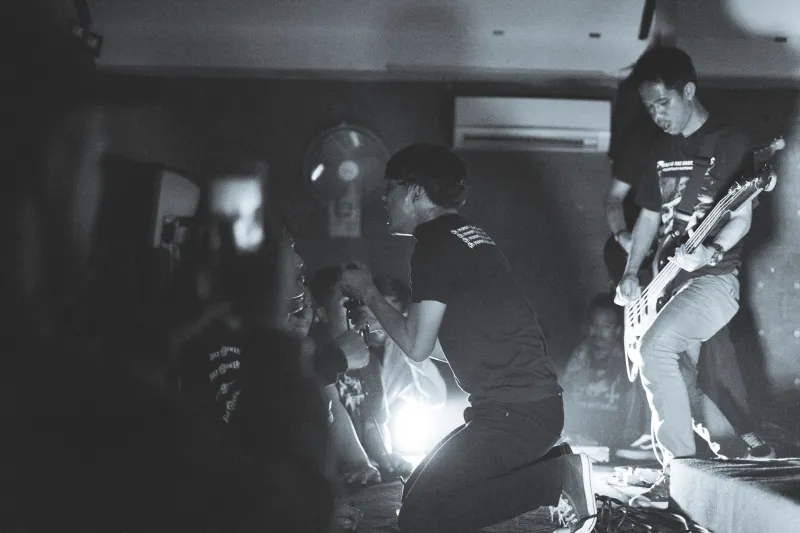
And then there's the live show, which the algorithm cannot touch. You cannot curate a mosh pit. You cannot A/B test a room full of people who drove forty-five minutes to see a band they barely knew. The live circuit remains the one space where rock music still operates on its original terms — you show up, you play, the crowd decides.
But that's a pretty narrow escape hatch for an entire genre.
The Playlist Isn't the Revolution. You Are.
Here's the uncomfortable conclusion: if you're waiting for the streaming platforms to fix this, you're going to be waiting through several more rounds of algorithmic updates, editorial restructuring, and press releases about how committed they are to artist discovery. None of that is coming.
What's actually available to you, right now, is the choice to be a deliberate listener instead of a passive one. To seek out music through channels that require something from you. To support the independent curators, the zines, the local radio shows, the Bandcamp deep dives that still operate outside the optimization machine. To tell your friends about bands the old-fashioned way — with genuine, slightly embarrassing enthusiasm — instead of sending a Spotify link and letting the algorithm do the talking.
The invisible DJ in the machine is only as powerful as your willingness to let it make decisions for you.
Turn it off. Go find something yourself. It's going to be messier, and slower, and occasionally you're going to waste forty minutes on a record that doesn't do anything for you.
That's exactly how it's supposed to work.