Sixty Bucks for a Shirt You'll Sweat In: The Band Merch Racket Has Gone Completely Off the Rails
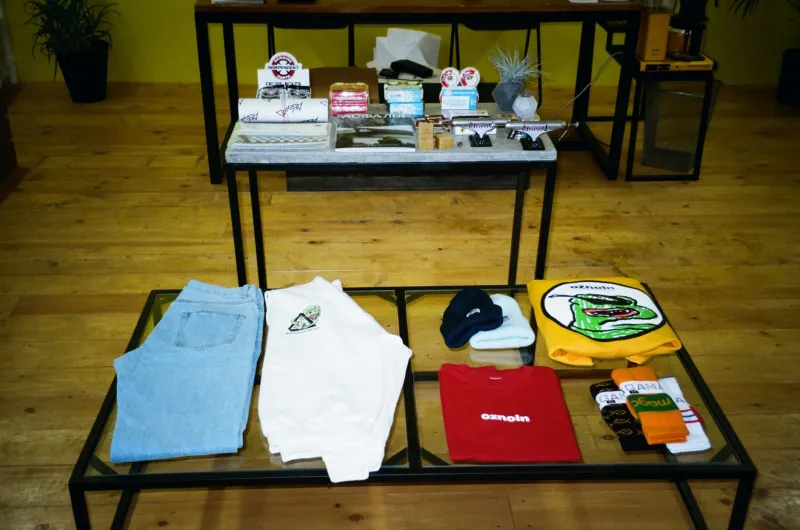
Let's set the scene. You've already paid $180 for a floor ticket, $22 for a warm beer in a plastic cup, and $15 to park three blocks away from a venue that smells like 1997 and broken dreams. You're feeling generous. You're feeling alive. You wander over to the merch table with the easy confidence of someone who hasn't checked their bank balance since Thursday.
And there it is. The shirt. Classic logo. Black cotton. The kind of thing you'd wear to a barbecue, a funeral, or both simultaneously if the night goes sideways. You flip the tag.
Sixty-five dollars.
You put the shirt down. You pick it back up. You put it down again. You buy it anyway, because you are a person with feelings and a deeply irrational relationship with sunk costs.
Welcome to modern rock merch culture, where the cotton is thin, the markup is unconscionable, and the whole arrangement has somehow been normalized into something we just accept, like traffic or the second act of most superhero movies.
The Economics of the Merch Table Are Genuinely Insane
Here's the uncomfortable math. A standard band t-shirt — your basic Gildan or Bella+Canvas blank — costs somewhere between $4 and $8 wholesale depending on quantity. Add screen printing, and you're looking at maybe $12 to $15 per unit for a decent run. In 1995, that shirt hit the merch table at $15 to $20 and everyone went home satisfied. Adjusted for inflation, that same shirt should run you around $30 today.
Instead, legacy acts are charging $55 to $75 for the exact same garment, and newer artists chasing the aesthetic of those legacy acts are pricing at $45 minimum because anything cheaper apparently signals that you're not serious enough to deserve their art on your chest.
The defense you'll hear from industry insiders — and from the bands themselves, when they bother to address it — is that venue fees have exploded. And that part is actually true. Many major venues now take a 30 to 40 percent cut of merch sales, a practice that crept into standard contracts sometime in the early 2000s and has been quietly devastating ever since. So the band isn't pocketing all of that $65. A chunk of it goes straight to the arena that already charged you a $12 "facility fee" just to walk through the door.
But here's the thing: that explanation, while accurate, doesn't fully excuse the end price. It just tells you the exploitation is distributed across multiple parties, which is somehow worse.
Venue Exclusivity: The Move That Punishes Loyalty
The trend that should make every real fan genuinely furious is venue-exclusive merchandise. This is the practice of releasing specific designs — often the most desirable ones, the ones with the tour dates or the city-specific artwork — only at the physical merch table, unavailable online, uncapturable by anyone who couldn't afford the ticket in the first place.
It's framed as a reward for showing up. A bonus for the faithful. In reality, it's a pressure tactic. It's the band saying: buy this now or it's gone forever, knowing full well that scarcity is one of the most reliable psychological levers in retail. Suddenly you're not just buying a shirt. You're buying proof of presence, a totem against the fear of missing out, a physical artifact of a night that cost you $300 before you even got thirsty.
And the people who got priced out of the ticket entirely? They get to watch eBay listings appear by midnight, where that exclusive tee is already going for $120 from a scalper who attended the show specifically to flip merch. The secondary market for band merchandise has become its own grotesque economy, and the bands — or at least their management — know it's happening and have made precisely zero structural moves to stop it.
The Resale Circus and What It Tells Us
A quick scroll through Depop, StockX, or any of the various Facebook resale groups dedicated to rock merch will tell you everything about where this culture has landed. Vintage shirts from the '90s — the real ones, the ones with the cracked ink and the slightly wrong tour dates — are selling for $200 to $600. That's partly nostalgia, partly genuine scarcity, and partly because those shirts were actually made of real fabric that survived three decades of washing.
But the modern resale market isn't just vintage hunters. It's people flipping current tour merch within 48 hours of purchase, treating band merchandise the way sneakerheads treat limited-release Jordans. And the industry has noticed. Some management teams have started producing merch in deliberately limited quantities to encourage that secondary market frenzy, because it creates buzz, and buzz is the currency that everything else converts into.
Meanwhile, the 19-year-old who just discovered their new favorite band and saved up to see them live goes home empty-handed because the shirt they wanted sold out before they made it through the merch line.
What We're Actually Losing Here
The band t-shirt used to mean something specific and unambiguous. It was a low-barrier act of allegiance. You didn't need to be wealthy to own one. You didn't need to be first in line or plugged into a resale network or following the right Instagram account. You just needed to care enough to hand over a reasonable amount of cash to a person standing behind a folding table.
That transaction was one of the last genuinely democratic rituals in live music. Everything else — the ticket price, the travel, the hotel if you're seeing a show out of town — scales with income. But the shirt was supposed to be for everyone.
Now it's a luxury item with a fast-fashion price point and a fast-fashion conscience to match. The cotton is still thin. The print will still crack after fifteen washes. But now it costs the same as a nice dinner, and the band's management team has a revenue model built around your inability to leave the venue without one.
Some bands are pushing back. Independent artists especially — the ones who built their following without a major label infrastructure — tend to price merch more honestly, because they understand that their fans are often broke and that a $25 shirt sold to someone who genuinely loves the music is worth more, spiritually and strategically, than a $65 shirt sold to someone who resents the transaction before they even get home.
But those bands are the exception, and the direction of travel in the industry is not toward them.
The merch table used to be where rock and roll proved it wasn't entirely about the money. Right now, it's doing the opposite. And until enough fans get mad enough to walk away — which, let's be honest, we probably won't, because the shirt is right there and the night was incredible — nothing is going to change.
Bring exact change. And maybe check the stitching before you hand over your card.