You Weren't There, Man: The Exhausting Religion of Rock Authenticity
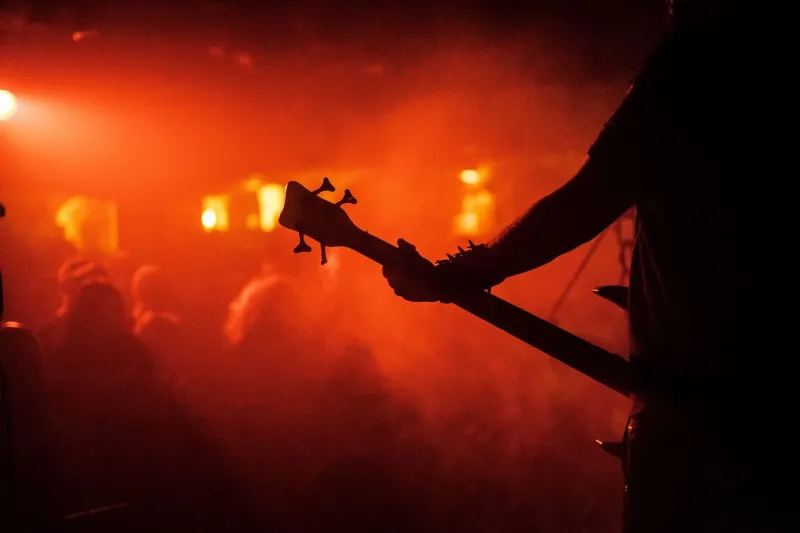
Somewhere on the internet right now — probably in a subreddit with a moderator who hasn't touched grass since 2009 — someone is explaining in exhaustive detail why your favorite band doesn't count. Not really count. You like them too much, you found them too late, you heard them through a TV commercial, or God forbid, a playlist. The verdict is in: you are not a real fan, and your opinion about the guitar tone on track seven is therefore invalid, inadmissible, and frankly embarrassing.
Welcome to the Gatekeeping Industrial Complex. It runs 24 hours a day, requires no sleep, and its primary product is the smug satisfaction of telling other people they're doing music wrong.
The Authenticity Metric Is Completely Made Up (And We All Agreed to Use It Anyway)
Here's the dirty secret nobody wants to admit: the rules of rock authenticity are entirely fabricated. There is no governing body. No federal agency certifying that you are, in fact, a Real Fan™. And yet, the criteria are oddly consistent across scenes, decades, and demographics.
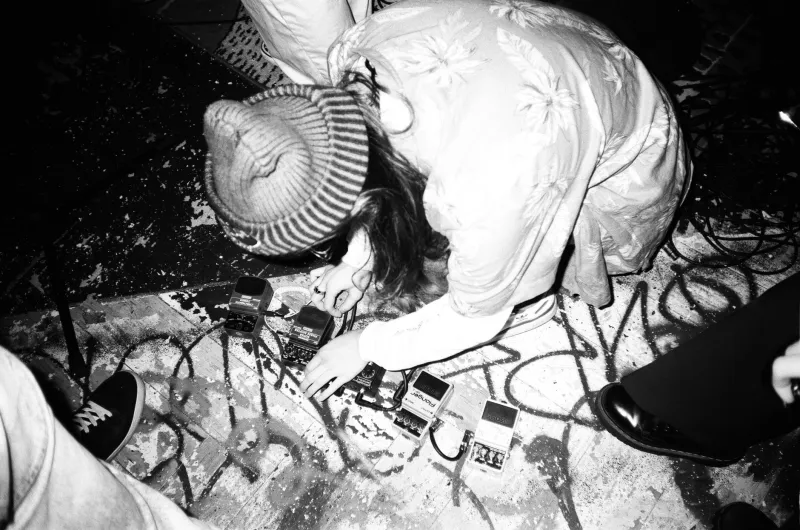
First album: did you find the band before they got good, or after they got popular? Underground shows: were you in a sweaty basement in Cleveland in 2011, or did you meet them at a festival with a corporate sponsor and a ferris wheel? Vintage gear: do you know what a '59 Les Paul Burst actually sounds like, or are you just nodding along? And the ultimate trump card — I liked them before they sold out — a phrase so overused it has lost all nutritional value, like a protein bar made entirely of cardboard and resentment.
The psychology here isn't mysterious. Humans are tribal. We build identity around taste, and taste feels more meaningful when it's exclusive. Liking a band that only twelve people know about feels like discovering a secret. When that secret gets out, it feels like a theft. The gatekeeping instinct is, at its core, a grief response dressed up as superiority.
But rock music specifically has turbocharged this tendency into something almost pathological.
Rock's Identity Crisis Has Always Been the Point
Rock and roll was built on contradiction. It was Black music appropriated by white artists, repackaged as rebellion, sold to teenagers, and immediately accused of selling out — all within about a decade of existing. Elvis was a sellout before he was a legend. The Beatles went from mop-topped pop stars to avant-garde experimentalists and got criticized at every single turn for both. Dylan went electric and got called a traitor by the same people who would later claim his electric era was the real genius.
This is not a bug. This is the entire operating system.
Rock has always defined itself against something, and when there's no external enemy available, it turns inward and starts eating its own fans. The gatekeeping isn't incidental to rock culture — it is rock culture, or at least a significant load-bearing wall of it. The constant negotiation over who belongs and who doesn't creates the tension that keeps the genre feeling alive, dangerous, and worth fighting about.
That doesn't make it any less exhausting to be on the receiving end of.
The Paradox Nobody Wants to Solve
Here's where it gets genuinely complicated: the gatekeeping that drives new fans away is also, perversely, what makes rock attractive in the first place.
Countless musicians have described discovering rock precisely because it felt like a locked room. It required something from you. You had to dig, read, seek out the weird record store clerk who would judge you for asking about the wrong band. That friction created investment. It made the music feel earned.
Streaming has largely eliminated that friction, which is great for access and terrible for mystique. When every album ever recorded is three taps away, nothing feels forbidden. Nothing feels like a secret. And rock, more than almost any other genre, has always traded on the feeling of secrecy.
So the gatekeepers — as infuriating as they are — are accidentally performing a cultural service. By being insufferable about authenticity, they're maintaining the perception that rock music requires effort, that it has stakes, that it means something to belong to this particular tribe. They're keeping the velvet rope in place even as they use it to smack newcomers across the face.
The Toll This Takes on Actual Human Beings
Let's not romanticize this too much, though, because the real-world consequences of rock's authenticity obsession are genuinely damaging.
Women in rock spaces have documented for decades the specific hell of having their credentials challenged by men who assume female fans are casual at best, decorative at worst. The same applies to fans of color navigating predominantly white scenes where the history of rock's Black roots has been so thoroughly whitewashed that pointing it out gets you accused of bringing politics into music.
Younger fans — the ones raised on streaming, discovering classic rock through TikTok or movie soundtracks — get dismissed as tourists before they've even unpacked their bags. And that dismissal is actively counterproductive if you actually care about rock music surviving as a living culture rather than a museum exhibit.
Every fan has a first time. Every die-hard started somewhere shallow. The person who bought a band's T-shirt before hearing the album might become their most devoted evangelist. Or they might get told they're not real enough and leave, taking their enthusiasm and their money somewhere that actually wants them.
So Is It a Feature or a Bug?
Both. Obviously both. The gatekeeping industrial complex is simultaneously rock's immune system and its autoimmune disorder — a mechanism designed to protect the culture that occasionally turns on the culture itself.
The healthy version of this instinct is curatorial. It's the impulse to share deep cuts, to push people toward B-sides and album tracks, to say yeah, but have you heard this. That version is generous. It's the record store clerk who's kind of intimidating but ultimately hands you something that changes your life.
The toxic version is the one that treats fandom as a zero-sum competition where your credentials only matter if someone else's don't. That version isn't protecting rock music. It's just protecting ego.
The genre that has survived disco, MTV, grunge, nu-metal, Auto-Tune, and the complete collapse of the music industry business model can probably survive a few casual fans who discovered it through a car commercial. What it might not survive is becoming so hostile to newcomers that it simply stops making new ones.
But try telling that to the guy in the subreddit. He was into rock before you were born, and he'd like you to know it.