Dead Wax Devotion: The Vinyl Collectors Who'd Rather Own Records Than Play Them
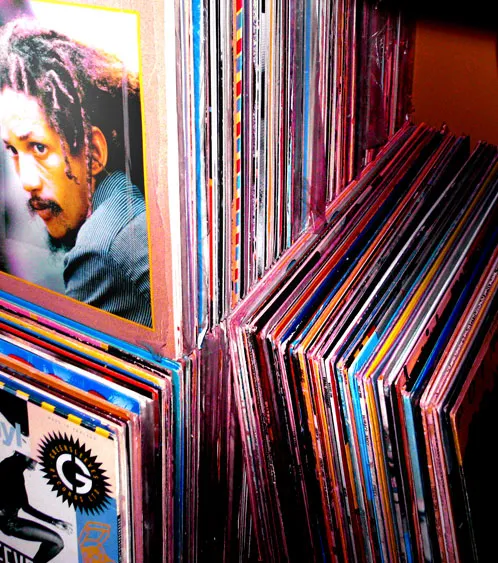
Photo: dubdem sound system, CC BY 2.0, via Wikimedia Commons
There's a copy of the original UK pressing of The Beatles' Please Please Me — the one with the gold and black Parlophone label, the one that sounds like it was recorded inside a biscuit tin and somehow still changed the world — sitting in a temperature-controlled storage unit in suburban New Jersey. It has not been played since 2019. Its owner, a financial analyst who asked not to be named, paid $11,000 for it at auction. He owns a turntable, technically, but it's also a display piece.
"I'll play it eventually," he told us. "Once I get the right stylus."
He has been waiting for the right stylus for four years.
Welcome to the cult of the rare pressing — a subculture that started as a genuine love affair with music and has quietly, steadily, and almost completely transformed into something that looks a lot more like commodities trading with better cover art.
From Crates to Portfolios
Let's be clear about something: vinyl collecting has always had an acquisitive edge. Flipping through crates at a record fair, finding a clean copy of something you'd been hunting for months — that dopamine hit is as old as the hobby itself. Nobody's pretending that the thrill of the hunt was ever purely about the music.
But there's a meaningful difference between someone who spends their Saturday afternoons in dusty shops hoping to find a first pressing of a Stax soul record and someone who has a spreadsheet tracking the appreciation rate of their sealed copy of the 1974 Japanese pressing of Dark Side of the Moon.
The first person is a music fan who collects. The second person is an investor who happens to own records.
The market has tilted hard toward the second type, and it's reshaping everything about how rare vinyl gets valued, traded, and — crucially — whether it ever gets played at all.
DiscogsMarketplace, the dominant platform for collector-to-collector sales, now lists individual records for prices that would've seemed satirical a decade ago. A sealed original pressing of the Velvet Underground & Nico with the intact banana peel? You're looking at anywhere from $25,000 to $40,000 depending on the day, the seller, and the phase of the moon. An original UK stereo pressing of Led Zeppelin's debut? Mortgage money. Literally. A down payment on a starter home in a mid-sized American city.
The Scarcity Machine
Record labels figured out a while back that "limited edition" is basically a magic spell you can cast on consumers to make them lose their minds and their savings simultaneously.
Colorway variants, regional exclusives, store-specific pressings, numbered editions, hand-signed covers — the machinery of artificial scarcity runs at full throttle, and it's been running so long that even new releases get treated like investment vehicles before anyone's had a chance to decide whether the music is actually good.
Think about what that means for a second. There are people buying limited-run pressings of records they haven't listened to because the pressing itself, as an object, has financial value independent of the music encoded in its grooves. The music has become almost incidental — a kind of bonus feature on what is functionally a speculative asset.
This is, to use a technical term, completely insane.
And the labels love it. Why wouldn't they? A standard retail record sells once. A "limited to 500 copies, hand-numbered, exclusive to one indie store in Portland" pressing sells out in four minutes, generates social media hysteria, and then sells again and again on the secondary market — with none of that secondary-market money going back to the artist, by the way. The scarcity machine is enormously profitable for everyone except the people who actually made the sounds.
The Counterfeit Problem Nobody Wants to Talk About
Here's where things get genuinely ugly: when you create a market where a piece of vinyl can be worth tens of thousands of dollars, you create an incentive for fraud that would make a cryptocurrency bro blush.
Counterfeit rare pressings are a genuine, documented, and growing problem in the collector community. High-quality fakes of desirable records — complete with convincing label reproductions, aged sleeves, and even artificially replicated dead wax etchings — circulate through the market with alarming regularity. Experienced collectors get burned. Authentication services have sprung up to meet the demand, charging hundreds of dollars to tell you whether the thing you just paid thousands of dollars for is actually what you think it is.
The community's response to this has been, charitably, mixed. There's a contingent that treats authentication skeptics like heretics. There's another contingent that has decided the only trustworthy records are the ones that come with documented provenance chains going back to the original purchase — which, conveniently, describes almost none of the records currently on the market.
Meanwhile, the people who just want to listen to music are buying reissues and getting on with their lives.
The Psychology of the Hunt
Ask a serious collector why they do it and you'll hear a version of the same answer every time: it's the hunt. The thrill of tracking down something rare, the satisfaction of completing a set, the pleasure of owning something that not many other people have.
This is real. It's also recognizably the same psychological architecture as gambling addiction, hoarding disorder, and every other compulsive acquisition behavior that therapists have been treating for decades. The records are almost beside the point — they're the chips on the table, the objects around which the ritual of acquisition gets organized.
None of this makes collectors bad people. It makes them human beings doing what human beings do, which is find elaborate ways to scratch neurological itches that evolution built into us for completely different purposes.
But it does raise a question worth sitting with: if you own a record you never play, in a sleeve you never open, stored in a room you rarely enter — what exactly do you have? A financial instrument. A status object. A very expensive reason to check Discogs at 2 a.m.
You have everything except the music.
What Gets Lost
The thing about vinyl — the actual thing, the reason people fell in love with it in the first place — is that it's a physical relationship with sound. You hold it, handle it, drop the needle, and something happens that no streaming platform has ever managed to replicate. It's tactile. It's present. It degrades slightly every time you play it, which means playing it is an act of commitment, a small sacrifice made in the name of actually hearing something.
That's the magic. And the collector market, in its current form, is systematically destroying it by treating records as objects whose value depends entirely on not being played.
The most expensive records in the world are the most unheard music in the world. There's something genuinely sad about that, underneath all the auction drama and the Discogs drama and the authentication drama.
Somewhere in that New Jersey storage unit, John Lennon is screaming into a microphone, and nobody is listening.