Ghost in the Studio: AI Is Quietly Stealing Session Work and the Musicians Didn't See It Coming

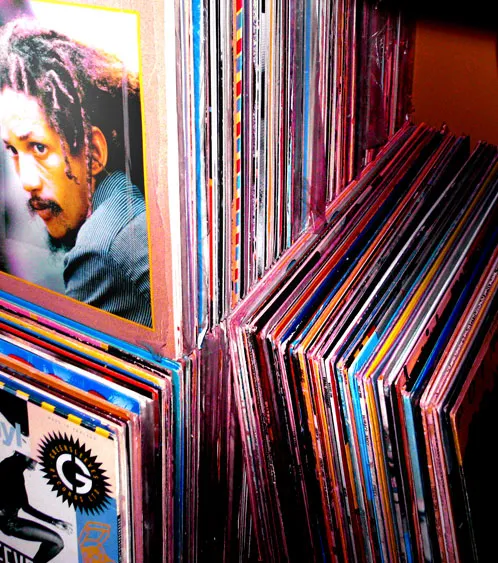
Photo by Photo by Brecht Corbeel on Unsplash on Unsplash
Marcus has been a session guitarist in Nashville for eleven years. He's played on records you've heard — not as a credited artist, but as the guy who made the credited artist sound better than they are. He's done commercial jingles, album tracks, film scores, video game soundtracks, and enough country records to wallpaper a medium-sized barn. Last year, his annual income from session work dropped by roughly forty percent.
"It's not like anyone called me and said 'we're going with AI instead of you,'" he told us. "The calls just stopped coming. And when I asked around, I started hearing the same thing from everyone. The budgets aren't there anymore. The sessions aren't being booked."
He paused. "The software doesn't need a hotel room."
The Quiet Displacement
The conversation about AI and music has been dominated, loudly and understandably, by fears about what happens to famous artists — what happens when AI can clone a voice, generate a convincing facsimile of a beloved artist's style, or create original music that consumers can't distinguish from human-made work.
Those are real concerns. They're also, in a sense, a distraction from the displacement that's already happening, right now, to the musicians who were never famous and never expected to be — the session players, the demo specialists, the composers who filled the vast middle tier of the music economy with their invisible, essential labor.
AI music generation tools — Suno, Udio, and a growing list of competitors — have reached a level of functional competency that makes them genuinely useful for a specific and economically significant category of music production. They're not replacing Kendrick Lamar. They're replacing the guitarist who got paid $400 to lay down a rhythm track for a mid-tier podcast's theme music. They're replacing the string arranger who got hired to add texture to a brand's advertising campaign. They're replacing the demo vocalist who used to get $200 a track to help songwriters pitch their material.
These aren't glamorous gigs. They're rent money. And they're evaporating.
What the Tools Actually Do Now
It's worth being specific about capability, because the discourse tends toward two equally useless extremes: either AI music is a revolutionary force that will render human musicians obsolete within five years, or it's a novelty that produces garbage and nobody serious would ever use it professionally.
The truth is somewhere less dramatic and more economically damaging than either pole.
Current AI music generation is genuinely good at producing competent, functional music in a wide range of styles. Give it a prompt — "upbeat indie rock, 120 BPM, guitar-forward, sounds like early 2000s alternative" — and it will produce something that a casual listener would have no particular reason to identify as non-human. It's not transcendent. It doesn't have soul in any meaningful sense. It makes choices that a thoughtful musician wouldn't make.
But here's the thing: a lot of professional music work doesn't require transcendence. It requires adequacy. It requires something that fills a specific functional role in a specific production context without drawing attention to itself. And for that category of work — which is, conservatively, the majority of professional music production by volume — AI has crossed the adequacy threshold.
For a production company that used to spend $2,000 on session musicians for a corporate video's background score, the calculation is now genuinely difficult. The AI option costs almost nothing, delivers in minutes, and requires no scheduling, no contracts, no overtime, no creative disagreements. The human option costs $2,000 and is unambiguously better in ways that may or may not matter to the client.
The Union Is Awake, But the House Is Already On Fire
The American Federation of Musicians — the AFM, the union that has represented professional musicians in the United States since 1896 — has been increasingly vocal about AI's threat to its membership. They've pushed for legislative protections, negotiated AI clauses into some contracts, and issued statements that range from measured concern to something approaching alarm.
This is all good and necessary and also significantly behind the curve of what's actually happening in studios, production houses, and commercial music shops across the country.
The work that's already gone didn't disappear through formal processes that unions can negotiate over. It disappeared because production budgets quietly shifted, because clients stopped asking for human musicians for certain categories of work, because the decision to use AI instead of a session player often gets made at a level below formal contracting — a producer's choice, a budget conversation, a practical decision that never shows up in any document the union can point to.
You can't collectively bargain against a thing that's already happened.
"The union is fighting the last war," one Los Angeles session musician told us, speaking anonymously because she still hopes to work with the producers she was criticizing. "They're focused on protecting credits and royalties for high-profile work. The work that's actually disappearing is the low-profile stuff that nobody was tracking in the first place."
The Creativity Argument and Why It Only Goes So Far
The standard defense of human musicianship against AI encroachment goes something like this: AI can replicate surface features of music, but it cannot replicate genuine creativity, emotional depth, or the ineffable quality of human expression. Therefore, human musicians will always have a market.
This argument is correct in the abstract and increasingly irrelevant in practice.
Yes, a great guitarist brings something to a recording that no AI can currently match. Yes, the human element in music production creates results that are qualitatively different from algorithmically generated content. Yes, there will always be a market for genuine human artistry at the highest levels of the industry.
But the musicians being displaced right now are not, for the most part, working at the highest levels of the industry. They're working in the middle — the enormous, economically vital middle that produces most of the music most people hear most of the time. And in that middle, the creativity argument doesn't protect you if the client doesn't care about the difference.
A lot of clients don't care about the difference. They never did. They cared about adequacy, about deadlines, about budget. AI meets all three of those criteria more efficiently than a human musician. The creativity argument is a genuine truth that is functionally useless to the people who need protecting.
What Comes Next
Marcus is pivoting. He's started teaching guitar online, building a Patreon, exploring licensing his own original recordings directly. He's not giving up on session work entirely, but he's not counting on it the way he used to.
"I think there's still a market for what I do," he said. "I just think it's going to be smaller, and the people who are going to pay for it are going to be people who specifically want a human, not people who just need a guitar part."
That's probably right. It's also a description of a much smaller industry, serving a much more niche market, paying much fewer working musicians a living wage.
The AI revolution in music isn't a coming disruption. It's a current one, happening quietly in budget spreadsheets and booking calendars, invisible to everyone except the musicians whose phones have stopped ringing.
The ghost is already in the studio. It just hasn't introduced itself yet.