No Bouncer at the Door: How the Gatekeeping Gods Got Dethroned and Rock's Freaks Finally Got In

Photo: Théodore Ralli, Public domain, via Wikimedia Commons
There used to be a very specific checklist for becoming a rock star in America. You needed the right look — something that read as dangerous but not actually dangerous, threatening enough to sell magazines but palatable enough for a Clear Channel playlist. You needed connections, a manager who knew a guy who knew a label A&R rep who had lunch with someone at Rolling Stone. You needed to sound like something that had already worked, dressed up just barely enough to pass as new. And above all, you needed permission.
That permission structure is now a smoking crater in the ground, and TikTok handed out the dynamite for free.
The Old Boys' Club and Its Very Specific Taste in Rock Stars
Let's not romanticize the gatekeeping era too hard. Yes, it produced some genuinely transcendent artists. But for every Nirvana that slipped through, there were a thousand bands that got laughed out of A&R meetings because their singer was too weird, their sound was too niche, or their image didn't fit the mold that some 52-year-old executive in a Midtown Manhattan office had decided was commercially viable that quarter.
The music industry's version of meritocracy was always more mythology than reality. It was a velvet rope economy — who you knew, what you looked like, whether your music could be easily filed next to something that already sold. Radio programmers weren't taking chances. Labels weren't funding experiments. The system was designed to replicate success, not discover it.
If you were a Black artist trying to break into rock spaces, a queer musician whose identity complicated the narrative, a woman who played guitar too aggressively for the comfort of male producers, or just someone whose sound genuinely didn't fit any existing shelf — you were largely on your own. The gatekeepers weren't evil, exactly. They were just extraordinarily, catastrophically risk-averse with other people's dreams.
Enter the Algorithm, Stage Left, Carrying a Wrecking Ball
TikTok didn't set out to democratize rock music. It set out to keep people scrolling. But the side effect of building a platform where a 19-year-old in Tulsa can post a 60-second clip of herself doing something genuinely unhinged with a guitar and wake up with 400,000 followers — that side effect turned out to be quietly revolutionary.
Artists like Spiritbox, Wet Leg, and Wednesday built real, passionate fanbases through social media momentum before the traditional industry apparatus even knew their names. Bedroom producers with no budget and no connections are racking up millions of streams on music that would have been rejected as uncommercial a decade ago. The gatekeepers didn't disappear, exactly — they just lost their monopoly on the door.
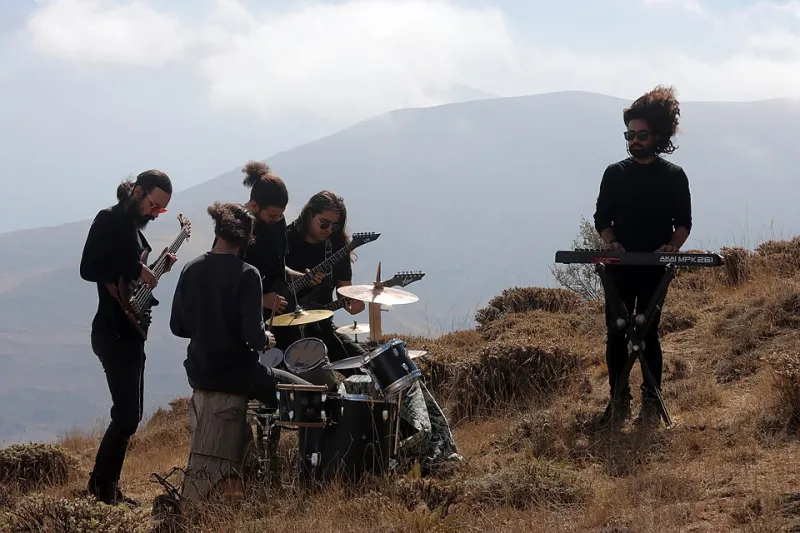
And what's walking through that door now? Honestly? All kinds of stuff. Artists who blend metal and hyperpop in ways that make genre purists physically uncomfortable. Trans musicians making the most visceral, emotionally raw rock records in years. Kids who learned guitar from YouTube tutorials and have never set foot in a recording studio that cost more than a used car. The unclassifiable, the abrasive, the genuinely strange — they're all in the building now.
The Liberation Is Real. So Is the Noise.
Here's where it gets complicated, because Fool Cool Rock has never been interested in selling you a clean narrative.
Yes, the collapse of traditional gatekeeping has freed an enormous amount of genuine talent that would have been strangled in the old system. That is unambiguously good. But "anyone can be a rock star" is a sentence that contains a trap, and it's worth looking at the trap directly.
When the barriers to entry disappear entirely, the sheer volume of content becomes its own kind of wall. The algorithm doesn't care about quality — it cares about engagement, retention, and the particular alchemy of shareability that has almost nothing to do with whether something is musically meaningful. You can get famous on TikTok for a riff that hits in the first three seconds and goes nowhere. You can build a following on aesthetic alone. The gatekeepers had terrible taste and served their own interests, but they did at least require artists to sustain something for longer than a viral moment.
There's also the uncomfortable reality that the new gatekeepers aren't music industry executives — they're engagement metrics, trending sounds, and the invisible preferences of an algorithm that nobody fully understands. Trading one gatekeeper for another doesn't automatically mean the new one has better values. It just means the bias is statistical rather than personal.
Does Anything Still Matter?
This is the question that keeps getting asked in increasingly panicked tones by music critics and industry veterans, and it's worth taking seriously even if the people asking it are sometimes doing so to protect their own relevance.
Here's what actually matters: the artists who are thriving in this new landscape aren't the ones who gamed the algorithm perfectly. They're the ones who used the open door to build something real — genuine communities, consistent artistic identity, music that holds up past the first listen. Bedroom Rockers who went viral and then stayed are the ones who had something to say beyond the clip. The liberation only counts if you use it to make something that lasts.
The gatekeeping collapse didn't make rock music easier. It made the stakes different. You don't need permission anymore, but you do need to be worth paying attention to for longer than 15 seconds. That's actually a harder bar to clear than it sounds.
The freaks are in. The door is open. Now comes the part where we figure out what they're going to do with the place.